
When markets are volatile and economic cycles are unpredictable, the discipline of investing in tangible, intrinsically valuable assets becomes not just a preference — but a strategic imperative.
Volatility is not a temporary condition. It is the permanent backdrop against which every serious investor must build a durable framework. Interest rate uncertainty, geopolitical fractures, technology-driven disruption, and the reshaping of global supply chains have combined to create an environment where the assumptions that underpinned two decades of portfolio construction no longer hold with confidence.
In this context, a return to first principles is not a retreat from sophistication. It is the most sophisticated response available. And the first principle that matters most is this: assets with intrinsic, tangible value — grounded in real economic function, essential industries, and physical scarcity — provide a foundation that financial instruments built on sentiment and expectation cannot replicate.
What Asset-Backed Investing Actually Means
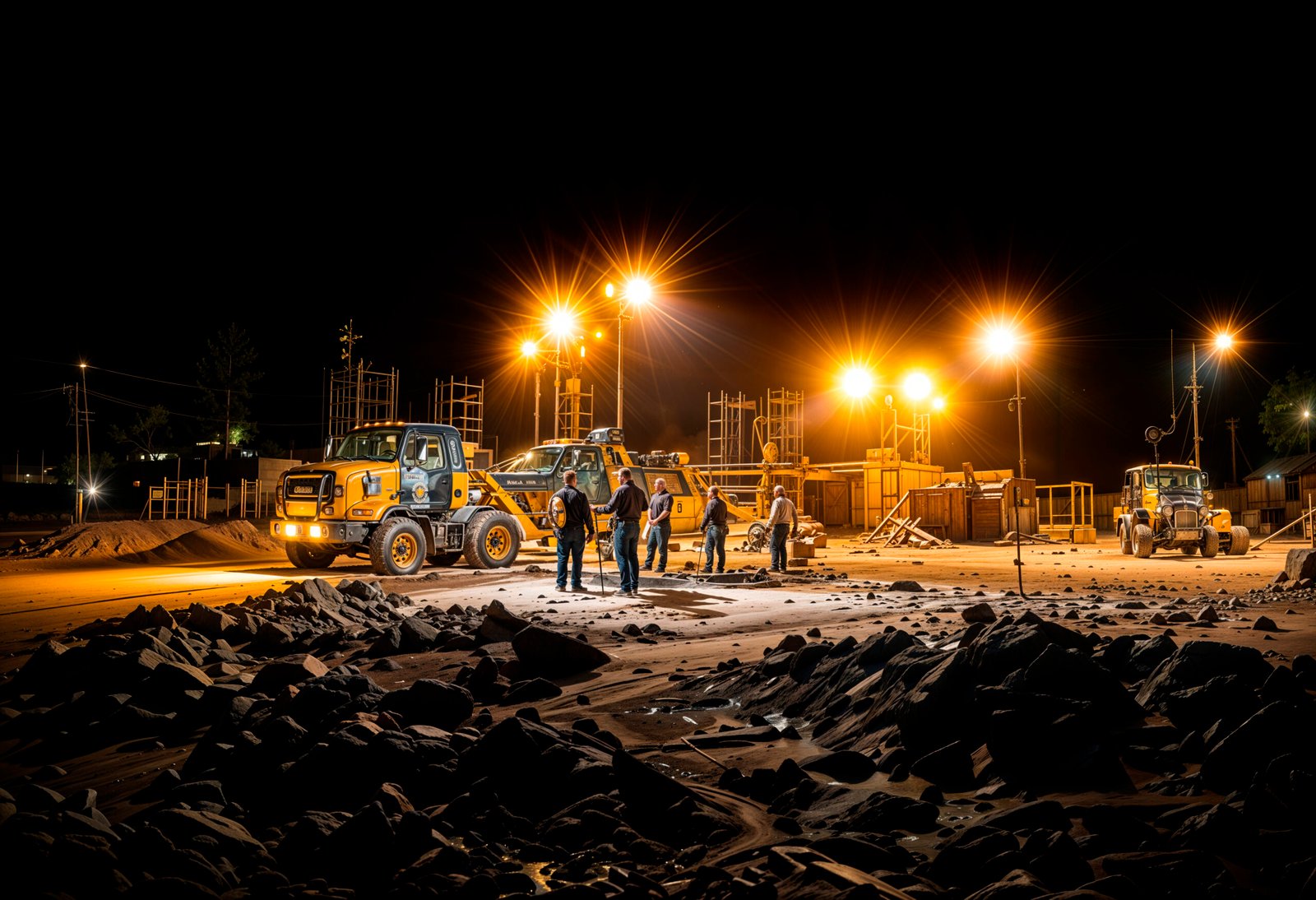
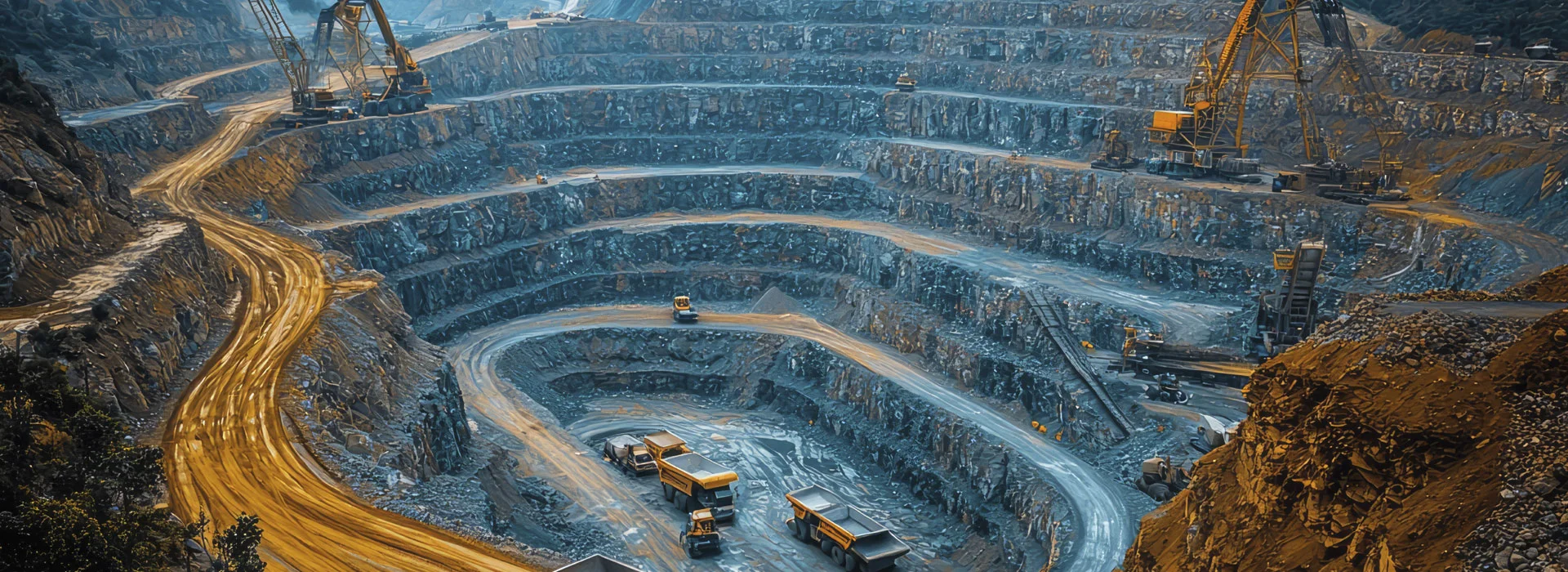
Asset-backed investing, at its core, is a commitment to invest in things that have value independent of the financial system’s assessment of them. A mineral deposit has value because the world needs what it contains. An oil and gas processing platform has value because energy is essential to human activity. A logistics corridor through which mineral output reaches global markets has value because trade cannot function without it.
This is distinct from investing in companies whose value is primarily a function of multiple expansion, investor sentiment, or speculative growth projections. Those assets can deliver extraordinary returns in the right cycle — and can destroy capital with equal speed when cycles turn. Asset-backed positions provide a different risk profile: one in which downside is anchored by the intrinsic worth of the underlying asset, even when markets temporarily reprice it.
The family office community has understood this for longer than most institutional investors. Unlike pension funds constrained by liquidity requirements and quarterly reporting cycles, family offices can hold real assets for the durations those assets require — seven, ten, fifteen years or longer. This patience is not simply a stylistic preference. It is a structural advantage that allows family offices to capture value that shorter-duration capital must leave on the table.
Natural Resources as a Long-Term Asset Class
Natural resources occupy a unique position in asset-backed investing. They are, by definition, scarce — subject to depletion, extraction complexity, and supply chain constraints that generate pricing dynamics no financial instrument can artificially replicate. Precious metals, base metals, and strategic minerals have delivered returns through cycles of inflation, deflation, geopolitical turbulence, and technological change precisely because their demand is structural rather than cyclical.
Gold broke through $4,000 per ounce in October 2025, driven by investors seeking stability in an environment of economic and political uncertainty. Copper, underwritten by the global energy transition and the buildout of electricity infrastructure, commands prices supported by firm long-term fundamentals. Lithium and cobalt, despite near-term price volatility, face a demand trajectory that reflects the irreversible industrialisation of battery technology across every major economy.
For investors who approach these assets with the right time horizon and the right capital structure, natural resources offer something that financial markets are increasingly unable to provide: a coherent, defensible investment thesis grounded in the physical reality of the world.
Infrastructure as a Complement
Asset-backed investing is not limited to resource extraction. The infrastructure that supports resource economies — processing facilities, logistics corridors, port connectivity, power generation for remote operations — offers returns that are often more stable and more predictable than the underlying commodity, while benefiting from the same demand drivers.
A copper mine in the DRC produces variable returns depending on copper prices, operational efficiency, and extraction costs. But the railway that connects that mine to the coast, the processing facility that converts raw ore to refined metal, and the power plant that supplies the energy for both — these are assets with long-duration revenue streams, high barriers to entry, and essential economic function. They are infrastructure investments in the most meaningful sense of the word.
This is why asset-backed investing, properly understood, encompasses not just the mineral in the ground but the entire value chain through which that mineral reaches the markets that need it. The investors building integrated positions across extraction, processing, and logistics infrastructure are constructing portfolios with multiple revenue streams, structural advantages, and genuine durability.
The Importance of Downside Protection
Perhaps the most underappreciated dimension of asset-backed investing is its contribution to downside protection. In a portfolio of equities, the floor in a severe market dislocation is determined by sentiment — which can move to zero with devastating speed. In a portfolio anchored in real assets, the floor is determined by the intrinsic utility of the asset — which has a lower bound defined by physical reality.
This does not mean real asset portfolios are immune to loss. They are not. But their risk profile is fundamentally different from financial assets whose pricing is disconnected from underlying economic function. A portfolio built around natural resources, energy infrastructure, and essential industry assets is, structurally, more resilient in the scenarios that matter most: economic dislocation, geopolitical disruption, and inflationary spirals driven by commodity supply constraints.
Conclusion
The case for asset-backed investing is ultimately a case for simplicity. Invest in things that have real value. Ensure that value is protected by a sound capital structure and an experienced operating team. Hold for the duration that allows the asset to fully realise its potential. This is not a complex thesis. But in an investment world that has grown accustomed to complexity as a substitute for clarity, it is a thesis that consistently outperforms.
Uncertainty is permanent. Asset-backed investing is one of the most reliable responses to it that long-term capital has ever found.